Why AI Will Change the Way You Learn (But Never Replace Your Teacher)
Artificial Intelligence in the Modern Educational Landscape
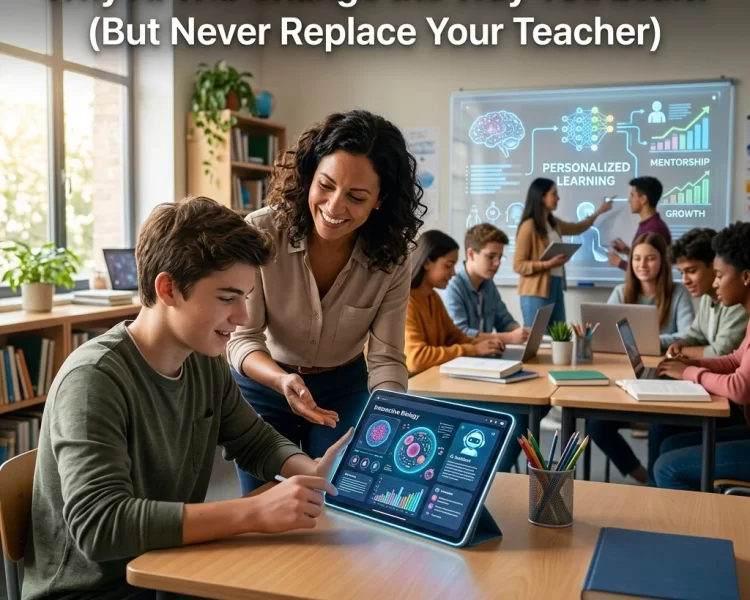
The integration of Artificial Intelligence (AI) into the educational sector represents a fundamental shift in pedagogical methodology. At iBOS (International British Online School), the adoption of these technologies is governed by a philosophy that prioritises human-led instruction. AI is utilised as a functional tool to enhance the learning experience rather than a substitute for professional educators.
The current educational climate necessitates a clear understanding of how AI influences student performance, cognitive development, and the acquisition of the British National Curriculum.
Core Functions of AI in Online Learning
AI technologies currently perform several key functions within a digital learning environment:
- Data Personalisation: Algorithms analyse student performance data to identify specific areas of weakness.
- Content Adaptation: Automated systems adjust the difficulty level of supplementary exercises based on real-time feedback.
- Administrative Efficiency: AI handles routine tasks such as scheduling and basic information retrieval, allowing staff to focus on complex instructional needs.
- Immediate Feedback: Automated testing platforms provide instant results for objective assessments, such as multiple-choice questions in Online Secondary School mathematics.

The Impact of AI on Cognitive Processes
Research indicates that AI facilitates a faster approach to problem-solving. However, this speed often presents a conflict with the depth of understanding required for academic excellence. The transition from traditional study methods to AI-assisted learning involves significant changes in how students process information.
The Risk of Synthetic Cognition
"Synthetic cognition" refers to a pattern where students prioritise the speed of AI-generated output over independent reasoning. This phenomenon presents several risks to academic integrity and intellectual growth:
- Reduction in Critical Thinking: Reliance on AI for summarisation can prevent students from engaging deeply with primary texts.
- Diminished Creativity: Automated content generation may bypass the iterative process necessary for developing original ideas.
- Superficial Understanding: Quick answers often lack the nuance provided by historical or theoretical context.
To mitigate these risks, iBOS emphasises the role of the teacher in guiding students toward "instrumental use" of AI. This involves using the technology as a thinking partner or coach rather than a shortcut.
Why Human Teachers Remain Essential
The role of the educator at iBOS extends beyond the simple delivery of information. Human teachers provide essential elements that AI cannot replicate, particularly within the framework of the British National Curriculum.
Pastoral Care and Ethical Oversight
Education is a social and ethical process. Teachers perform functions that are currently impossible for AI systems:
- Emotional Support: Recognising signs of frustration or disengagement in a student.
- Ethical Guidance: Teaching students to take ownership of their academic output and understand the implications of plagiarism.
- Moral Frameworks: Facilitating discussions on complex social and historical topics that require human empathy and nuanced judgment.

Subject Matter Expertise and Mentorship
The teaching and support staff at iBOS provide mentorship that shapes a student's academic career. This is particularly relevant during the preparation for IGCSE results and A-level results.
Teachers provide:
- Contextual Knowledge: Explaining the "why" behind scientific theories or historical events.
- Complex Feedback: Offering qualitative critiques on essay structure, tone, and argumentative strength.
- Career Guidance: Helping students navigate the transition from Online Sixth Form to higher education or professional employment.
Practical Integration of AI at iBOS
The iBOS approach to technology is methodical. AI is integrated into specific areas of the curriculum to maximise efficiency without compromising the quality of the online primary school or secondary school experience.
AI as a Personalised Tutoring Tool
AI-powered systems can act as hyper-personalised tutors. These systems are most effective when they:
- Adjust the pace of instruction for students who require additional time.
- Provide diverse formats of information (visual, text, auditory) to suit different learning preferences.
- Offer 24/7 access to basic drills and practice problems, supplementing the live lessons led by teachers.

Maintaining Academic Standards
The use of AI within the iBOS framework is strictly monitored to ensure it aligns with the requirements of exams at iBOS. Students are taught that while AI can assist in the preparation phase, the final assessment of their capability relies on their individual performance and cognitive application.
The Future of AI-Assisted Learning
As AI technology evolves, its role in the classroom will likely expand. However, the requirement for human leadership will remain constant. Future developments in AI within the education sector are expected to focus on:
Advanced Learning Analytics
Future systems will provide more sophisticated data regarding student engagement levels and predictive analytics for academic performance. This data will be used by teachers to tailor their instructional strategies more effectively.
Collaborative AI Environments
AI will increasingly serve as a facilitator for collaborative projects, helping to organise group work and manage information flow among students in different geographical locations.

Conclusion of the iBOS Philosophy
iBOS maintains a firm stance that technology must serve pedagogy. The integration of AI is not a trend but a strategic enhancement of the educational process. By maintaining a teacher-led model, iBOS ensures that students develop the resilience, critical thinking, and ethical awareness necessary for success in a technologically advanced world.
Summary of Key Principles
- Teacher as Guide: The teacher remains the primary source of academic and pastoral authority.
- AI as Tool: AI is used for efficiency, personalisation, and data analysis.
- Student Accountability: Students are responsible for the integrity and quality of their academic work.
- Continuous Evaluation: The impact of AI on learning outcomes is constantly reviewed to maintain the high standards of the British National Curriculum.
For further information regarding the iBOS curriculum and the role of technology in our classrooms, please refer to our Why iBOS page or explore our Articles and Blogs. Details regarding the upcoming academic year can be found in our term dates section.