Online School Fees: What Parents Should Know Before Choosing a British Online School
Choosing the right school for your child is one of the most significant decisions, and investments, you will ever make as a parent. In recent years, the landscape of British education has shifted dramatically. While traditional private schools have long been the "gold standard," a new generation of premium British online schools has emerged, offering the same academic rigour, qualified teachers, and prestigious qualifications at a fraction of the cost.
However, when you start looking at online school fees, you quickly realise that the price tag doesn't tell the whole story. A "budget" online school might save you money upfront, but it could cost your child in terms of academic support, social development, and university prospects. Conversely, the most expensive school isn't always the best fit for your specific needs.
In this comprehensive guide, we will break down everything you need to know about online school costs. We'll look beyond the numbers to explore what actually creates "value" in an online education and provide you with a decision framework to ensure your investment leads to the best possible outcome for your child.
What Parents Should Look For Beyond the Fee
When comparing British online school fees, it is easy to get caught up in the monthly or annual tuition figures. But a school is more than a subscription service; it is an ecosystem of learning. To find true value, you need to look under the bonnet and see what those fees are actually paying for.
Live Teaching vs Recorded Lessons
This is perhaps the most critical factor in determining the price and the value of an online school.
Many lower-cost online providers rely heavily on "asynchronous" learning. This means students are given access to pre-recorded videos, digital textbooks, and automated quizzes. While this model offers maximum flexibility, it often lacks the engagement and accountability children need to thrive.
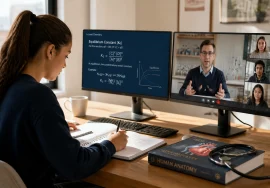
In contrast, premium schools like iBOS prioritise live, interactive teaching. In this model, students attend a virtual classroom at a set time, just like in a physical school. They can ask questions in real-time, participate in group discussions, and receive immediate feedback from their teachers.
Why it matters for value: Live teaching ensures your child isn't just a passive consumer of content. It builds the "soft skills" of communication and collaboration that are essential for future success. While a live-teaching model typically has higher fees (because it requires paying expert teachers for their time), the academic and social ROI is significantly higher.
Teacher Qualifications and Quality
In the UK, the title "teacher" implies a certain level of training and certification (such as QTS – Qualified Teacher Status). However, because online schools operate globally, the standards can vary wildly.
Value is found in schools that employ UK-qualified teachers who have experience in traditional British independent or high-performing state schools. These educators understand the nuances of the British National Curriculum and know exactly what examiners are looking for in GCSE and A Level assessments.
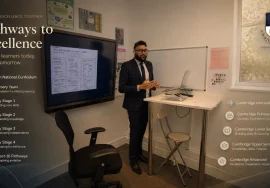
Furthermore, consider where the teachers are working from. At iBOS, our teachers deliver lessons from our dedicated London campus. This physical infrastructure allows for better professional collaboration, stronger safeguarding oversight, and a consistent standard of teaching that "work-from-home" models often struggle to maintain.
Class Sizes and Individual Attention
In a traditional school, a class of 30 is common. In the online world, some "recorded-lesson" platforms have thousands of students watching the same video, while "live" platforms might try to squeeze 50 students into a Zoom call to keep costs down.
True value in online education comes from small class sizes. When a teacher has only 10 to 15 students in a virtual room, they can see every face, check every student's understanding, and tailor their explanations to individual needs. If you are paying for an online private school, you should expect a level of personal attention that matches or exceeds a traditional private school.
Curriculum Quality and Accreditation
A British education is world-renowned because of its structured pathways and globally recognised qualifications. When evaluating fees, ensure the school is an accredited examination centre (for example, with Pearson Edexcel).
A high-value school won't just "teach to the curriculum"; they will provide a rich, deep learning experience that prepares students for the next stage. Whether your child is in Online Primary School or moving through Online Secondary School, the curriculum should be rigorous, up-to-date, and delivered by subject specialists.

Pastoral Care and Wellbeing
One of the biggest myths about online schooling is that it is socially isolating. In a high-value school, this couldn't be further from the truth.
Student wellbeing should be a line item in the school's budget. This includes:
- Form tutor groups for daily check-ins.
- Personal, Social, Health and Economic (PSHE) lessons.
- Extra-curricular clubs and societies.
- Mental health support and a robust safeguarding policy.
If a school is significantly cheaper than its peers, pastoral care is often the first thing to be cut. For many parents, the peace of mind that comes with knowing their child is safe and supported is worth every penny of the tuition fee.
Exam Preparation and University Pathways
For older students, the ultimate goal of schooling is often university entry. This requires more than just good grades; it requires expert guidance.
A premium online school will provide:
- Structured GCSE preparation.
- Specialist A Level pathways.
- UCAS support and personal statement mentoring.
- Careers advice and university interview practice.
When you look at the fees for Year 12 and 13, you are paying for the expertise of staff who can help your child secure a place at a Russell Group or Ivy League university.
Understanding What Creates Value in an Online School
To truly understand the "value" of online education, we have to compare it to the alternative. The average UK private school fee in 2026 is approximately £18,000–£20,000 per year for day pupils, and upwards of £45,000 for boarding.
Most high-quality British online schools fall within the £4,000 to £9,000 per year range. This represents a saving of over 60% compared to traditional private education, yet the academic curriculum is often identical.
Academic Rigour and Outcomes
Value is ultimately measured by results. High-performing online schools often see their students achieve grades that sit well above the UK national average. Because online schools can attract top-tier teaching talent from across the country (or, in our case, base them in a London hub), the quality of instruction is often superior to a local physical school that is limited by its geography.
Flexibility Without Compromise
For many families, the value of online school isn't just about money; it’s about time. The ability to study from anywhere in the world, whether you are a high-level athlete, a family that travels for work, or a student who simply thrives in a quieter home environment, is a priceless benefit.
However, the "value" here is "flexibility with structure." A school that offers a full, live timetable gives you the flexibility of location while maintaining the discipline and routine of a traditional school day. This prevents the "drift" that often happens in less structured homeschooling environments.
The Real Cost of "Cheaper" Options
It is tempting to choose the lowest-cost provider, but "budget" online schools often have hidden academic costs:
- Low Engagement: Without live lessons, students often disengage, leading to poor exam results and the need for expensive private tutors later on.
- Lack of Accountability: If no one is checking if a student is "logged in," it’s easy for them to fall behind.
- Weak Credentials: Some low-cost platforms are not accredited schools, meaning they cannot host exams or provide official transcripts for university.
Online School Value Comparison Table
To help you evaluate different providers, use this table to see what typically comes with different fee levels in the 2026 market.
| Feature | Budget Online Platform (£1.5k – £3k) | Standard Online School (£3k – £6k) | Premium Online School (£6k – £9k+) |
|---|---|---|---|
| Lesson Style | Mostly recorded / self-study | Mix of live and recorded | 100% Live, Timetabled |
| Teachers | Content creators / Tutors | Mixed qualifications | UK-Qualified Subject Specialists |
| Class Size | Unlimited (Video access) | 20 – 30 students | Small groups (e.g. 10-15) |
| Pastoral Care | Little to none | Basic email support | Dedicated Form Tutors & Wellbeing |
| Accreditation | Often not a registered centre | Usually accredited | Full UK/International Accreditation |
| London Campus | No | Remote only | Physical Campus Infrastructure |
| Uni Support | Automated resources | General guidance | Bespoke UCAS & Careers Mentor |
Hidden Costs Parents Should Consider
Tuition fees are the primary expense, but to budget accurately, you should account for these "extras" that are common across almost all online schools:
1. Examination Fees
Most online schools are "teaching institutions," meaning they provide the education, but you must pay the exam boards (like Pearson Edexcel or AQA) directly for the sittings. Fees typically range from £150 to £300 per subject for GCSEs and A Levels. At iBOS, we also support private candidates for GCSE exams, providing a clear path for students to sit their tests at our London centre or affiliated hubs.
2. Physical Textbooks and Materials
While many resources are digital, some subjects (especially at A Level) still require physical textbooks or specific science kits for home experiments. Budget around £100–£200 per year for these.
3. Technology Requirements
A reliable laptop and high-speed internet are non-negotiable. You may also want to invest in a second monitor or a digital stylus for subjects like Mathematics or Art.
4. Extra-Curricular Trips
If the school organises in-person meetups or international trips (like our popular global student gatherings), these will be optional additional costs.

10 Questions to Ask Before Choosing an Online School
Before you sign a contract, ask these questions to ensure you are getting true value for your money:
- Is every lesson taught live by a teacher, or is some of it self-study? (Live teaching is the gold standard for engagement).
- Where are your teachers based? (A UK-based school with a physical campus offers better oversight).
- What was your school's average GCSE and A Level grade last year? (Results are the ultimate proof of value).
- How do you handle safeguarding and student wellbeing? (Ensure there is a human being watching out for your child).
- Is the school a registered examination centre? (This simplifies the exam process significantly).
- What is the maximum class size? (Smaller is always better for individual progress).
- Do you offer a full British National Curriculum, including "soft" subjects like Art or PE? (A broad curriculum develops a well-rounded child).
- What university support do you provide for Sixth Formers? (Essential for those aiming for top-tier institutions).
- Are there opportunities for students to socialise outside of lessons? (Clubs and assemblies are vital).
- Can I speak to a current parent or see a live demo of the platform? (Transparency is a sign of a high-quality school).
Decision Framework for Parents
Evaluating online school fees can be overwhelming. Follow this four-step framework to make a confident choice:
Step 1: Define Your "Must-Haves"
Does your child need the structure of a live timetable, or are they disciplined enough for self-paced work? Do they need specific subjects (like Further Maths or Psychology) that only premium schools tend to offer?
Step 2: Calculate the "Total Cost of Ownership"
Add the tuition fee to the estimated exam fees and tech costs. Then, subtract the money you will save on commuting, uniforms, and school lunches. Often, you'll find that a premium online school is actually more affordable than your local state school when you factor in all the "hidden" costs of physical attendance.
Step 3: Assess the Long-Term ROI
Think five years ahead. Will this school get your child into their first-choice university? The "value" of a school that helps a student move from a Grade 5 to a Grade 9 in their GCSEs is worth significantly more than the difference in tuition fees.
Step 4: Verify the Infrastructure
Choose a school with a "bricks and mortar" heart. A school that operates out of a physical building (like our Clapham campus) has a level of permanence and professional accountability that "virtual-only" companies cannot match.
Frequently Asked Questions
Why are some online schools so much cheaper than others?
Usually, the difference lies in the amount of live teaching. Cheaper schools rely on recorded content and large "webinar-style" classes. Premium schools pay for UK-qualified teachers to lead small, live interactive groups.
Do online school fees include GCSE and A Level exam costs?
In almost all cases, no. Exam boards charge their own fees, and exam centres (where your child physically sits the test) charge an administration fee. You should budget for these separately.
Can I pay online school fees monthly?
Most reputable schools, including iBOS, offer flexible payment plans to help families manage their budgets.
Is online school "worth it" compared to a free state school?
For many parents, the "value" comes from the smaller class sizes and the ability to follow the British Private School model (curriculum and standards) which offers a more direct path to prestigious universities than many state schools can provide.
Conclusion
Online school fees are about much more than a price tag. They are an investment in your child's future, their mental health, and their academic success. While "budget" options exist, the true value of a British online education is found in live interaction, expert UK teachers, and a school structure that replicates the rigour of the best independent schools.
At iBOS, we are proud to offer a model that combines the flexibility of the digital world with the proven standards of a London-based physical school. If you are looking for an education that offers world-class value and prepares your child for the global stage, we invite you to learn more about why iBOS is the leading choice for families worldwide.