Is Online School Worth It? A Cost vs Value Comparison for Parents
For many families, the decision to move from a traditional brick-and-mortar setting to an online school is often sparked by a specific need: perhaps a desire for more flexibility, a safer environment, or a more rigorous academic focus. However, once the initial research begins, the conversation almost inevitably turns to the "bottom line".
The real question isn't just "how much does it cost?" but rather, "what is the true value of this investment?" In an era where UK private school fees are rising significantly: compounded by the introduction of VAT on tuition: parents are rightly looking for alternatives that don't just save money, but actually deliver a better educational experience.
In this guide, we will break down the true costs of both traditional and private online schools, looking beyond the headline tuition figures to the hidden expenses and, more importantly, the long-term value for your child’s future.
Online School vs Traditional Private School: A Cost Comparison
When comparing costs, it is easy to look at the annual tuition fee and stop there. But a school's price tag is only part of the story. To understand if a British online school is worth it, we must compare the total cost of ownership for a year of education.
Tuition Fees: The Headline Difference
In the UK, traditional private day school fees have climbed steadily. As of 2024 and 2025, many senior day schools charge between £18,000 and £25,000 per year. For boarding schools, that figure can easily exceed £50,000. These costs are often subject to annual increases that outpace inflation, and the recent inclusion of 20% VAT has pushed many family budgets to the breaking point.
In contrast, a high-quality online school typically costs a fraction of this. Because online schools do not have the massive overheads of maintaining sprawling historic campuses, sports fields, and boarding houses, those savings are passed directly to the parents. Most premium online schools range from £5,000 to £9,000 per year for full-time provision.
The "Invisible" Costs of Traditional Private Schools
Parents often find that the "extras" at a physical private school can add an additional 10% to 20% to the annual bill. These include:
- Uniforms: Branded blazers, sports kits, and seasonal changes can cost between £300 and £700 per year.
- Transport: Whether it is the school bus or the daily fuel and time spent in the "school run," transport costs often reach £1,000–£3,000 annually.
- Trips and Activities: Mandatory field trips, overseas language exchanges, and "suggested" extracurriculars often come with separate, hefty price tags.
- Lunches: School meals are frequently billed as a separate mandatory extra.
The Costs of Online Schools
Online schools are not without their own costs, though they are generally more transparent:
- Technology: You will need a reliable, high-speed internet connection and a modern laptop or desktop computer with a high-quality headset and webcam.
- Exam Fees: Most online schools teach the curriculum but require students to sit exams at local physical centres. You will need to budget for private candidate GCSE exams or A-Level centre fees, which typically range from £150 to £250 per subject.
- Physical Socialisation: Since the school doesn't provide a physical football pitch, you may choose to invest in local sports clubs or music lessons to supplement your child's social life.
Cost vs Value Matrix

To determine if the investment is "worth it," we have to look at what you are actually buying. Below is a comparison of the value drivers for both models.
| Feature | Traditional Private School | Premium British Online School (iBOS) |
|---|---|---|
| Academic Focus | Broad, often includes mandatory non-academic subjects. | Targeted, rigorous focus on British Curriculum excellence. |
| Class Sizes | Average 15–25 students. | Smaller, focused groups (often 8–15). |
| Teacher Quality | UK qualified, but varying levels of digital literacy. | UK qualified, specialists in both subject and digital delivery. |
| Flexibility | Rigid 8am–4pm schedule; fixed location. | High flexibility; learn from anywhere in the world. |
| Student Wellbeing | Social pressure, risk of bullying, commute stress. | Calm environment, focus on student wellbeing, zero commute. |
| University Prep | Strong career advice, but often generalist. | Specialist UCAS guidance and A-Level pathways to top global universities. |
| Infrastructure | Physical labs, sports halls, historic buildings. | High-end digital platforms and London-based teacher campus. |
| Socialisation | Constant in-person interaction (pro and con). | Intentional socialisation via clubs and global community. |
Where Online School Delivers Exceptional Value
When parents ask, "Is online school worth it?", they are often looking for more than just a lower price. They are looking for a lifestyle and educational upgrade. Here is where the online education value truly shines.
1. Flexibility for Modern Families
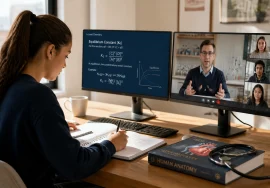
The traditional school calendar was designed for a world that no longer exists. For families who travel, live between two countries, or have children with elite sporting or artistic commitments, the flexibility of online school is priceless. At iBOS, lessons are live and timetabled, but the ability to log in from a hotel in Dubai, a villa in Spain, or a study in London means education never has to be paused for life to happen.
2. Personalised Attention and Smaller Classes
In a physical classroom, the teacher’s attention is often split between managing the room and delivering the content. In a digital classroom, the "crowd" disappears. Students can ask questions via chat or microphone without the fear of "looking silly" in front of peers. This creates a much higher level of engagement. For many students, the value of having a UK-qualified teacher respond to their specific needs in real-time is the difference between a passing grade and an A*.
3. A Global Perspective and Community
Online schools like iBOS aren't just "local schools on a screen." They are global hubs. Your child might be in a History lesson with classmates from five different continents. This fosters a level of cultural literacy and global citizenship that a local private school simply cannot replicate. The "worth" here is measured in the breadth of your child’s worldview and their comfort in a digital-first professional world.
4. Safeguarding and a Safe Learning Environment
Sadly, for many students, the traditional school environment is a source of anxiety rather than growth. Bullying, social cliques, and the "pressure to perform" in person can derail academic progress. Online schools provide a "socially safe" space. Students can focus entirely on their learning, supported by robust safeguarding policies, without the distractions of the playground.
Where Traditional Schools Still Have Advantages
To make an honest comparison, we must acknowledge what you "give up" when choosing the online route. Traditional schools are unmatched when it comes to:
- Specialised Facilities: If your child is a budding Olympic swimmer or needs a professional-grade chemistry lab for daily experiments, a physical school is essential.
- The "School Experience": Assemblies, sports days, and the physical "bustle" of a school building are parts of childhood that some families value highly.
- Immediate Childcare: For many parents, school is a form of childcare. Online school requires a level of student independence (especially in younger years) or a parent who is present in the home.
The question of whether online school is "worth it" depends on whether these physical facilities outweigh the benefits of a more focused, flexible, and affordable digital education.

Is Online School Right for Your Family?
Before you make the switch, use this checklist to evaluate if you are getting the best value for your child’s needs.
Parent Checklist: The Value Test
- Academic Readiness: Is my child self-motivated, or do they need the "physical presence" of a teacher to stay on task? (Note: iBOS’s live, timetabled lessons help solve this).
- Social Life: Do we have access to local sports, drama, or hobby groups to ensure our child has regular in-person interaction?
- The Commute: How many hours a week does my child spend in transit? Would they be better off using that time for sleep, hobbies, or extra study?
- Budgetary Impact: Does the saving on private school fees allow us to invest in other areas: such as university funds, travel, or specialised tutoring?
- University Goals: Does the school have a proven track record of sending students to top-tier universities?
Frequently Asked Questions
Will universities accept an online school education?
Absolutely. Universities care about your qualifications (International GCSEs and A-Levels) and the quality of your personal statement. They do not distinguish between an A* earned in a physical building and one earned via an accredited online school. In fact, many admissions officers value the independence and digital literacy that online students demonstrate.
How do online schools handle socialisation?
At iBOS, socialisation is intentional. We have virtual clubs, school assemblies, and even international meet-ups. However, we always encourage parents to supplement this with local, in-person activities to ensure a well-rounded social life.
Is online school harder than traditional school?
The curriculum is exactly the same (the British National Curriculum). However, online school requires a different type of discipline. Because there is no "back of the class" to hide in, students are often more engaged, which can lead to faster academic progress.
What about "screen time" concerns?
While students are on screens for their live lessons, they aren't "passively" watching. They are interacting, writing, and solving problems. Furthermore, the time saved by not commuting or moving between classrooms actually gives students more time to spend away from screens in the afternoons.
Conclusion
So, is online school worth it?
If you are evaluating online school benefits purely on a spreadsheet, the answer is a resounding yes. The savings on tuition, uniforms, and travel are substantial. However, the true value lies in the quality of life. It is found in the extra hour of sleep your child gets because they don't have to catch a bus. It is found in the confidence they gain from learning in a safe, focused environment. And it is found in the world-class A-Level results that open doors to global universities.
Choosing a school is the most significant investment you will make in your child's future. By looking beyond the price and focusing on the value of time, flexibility, and academic excellence, you may find that the future of education is already here.
To learn more about how we balance cost and world-class quality, read our companion piece: Online School Fees: What Parents Should Know Before Choosing a British Online School.