Can Parents Switch from Homeschooling to an Online School?
Choosing to homeschool is often one of the most rewarding decisions a parent can make. It offers freedom, flexibility, and the chance to tailor an education specifically to your child’s unique interests and pace. However, as children grow, particularly as they approach the crucial GCSE and A Level years, many families find that the demands of "doing it all" start to shift.
Perhaps you’ve found that teaching higher-level chemistry is a bit more daunting than primary school maths. Maybe your teenager is craving more social interaction with peers or needs the accountability that only a professional teacher can provide. Whatever the reason, if you are considering making the move, you aren't alone.
Switching from parent-led homeschooling to a structured British online school is a common and positive step. It isn’t an admission that homeschooling "didn’t work", rather, it’s an evolution of your child's educational journey. In this guide, we’ll walk you through exactly how to manage that transition, from curriculum alignment to helping your child find their feet in a virtual classroom.
Why Families Make the Switch
The decision to transition often comes from a place of wanting the "best of both worlds." You still want the safety and comfort of the home environment, but you need the academic rigour of a formal institution. Here are the most common reasons we see families make the jump.
Reaching Academic Limits
There comes a point where even the most dedicated parent-educator hits a wall. Whether it’s advanced calculus, complex literature analysis, or specialized sciences, the secondary curriculum requires subject-matter expertise. By moving to an online school, you hand the reins to UK-qualified teachers who live and breathe their subjects every day.
GCSE and A Level Preparation
The stakes get higher during the exam years. Navigating the different exam boards, ensuring the entire syllabus is covered, and keeping up with coursework deadlines can be a full-time job. A structured school provides a clear roadmap to success, ensuring no gaps in knowledge are left before those all-important exams at iBOS.
The Need for Structure and Routine
Some students thrive on complete flexibility, but others find that a lack of "school hours" leads to procrastination. A structured online learning environment provides a timetable, live lessons, and regular feedback. This routine often reduces friction at home, as the parent moves from "teacher/taskmaster" back to being just "Mum or Dad."
Social Opportunities and Community
One of the most cited reasons for switching is socialisation. While local homeschool groups are fantastic, an online school provides a global classroom. Students at iBOS interact daily with peers from around the world, participating in live discussions, group projects, and even virtual clubs.
What Does the Transition Process Actually Look Like?
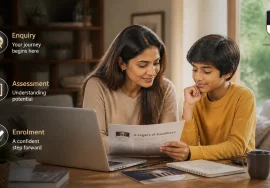
Transitioning doesn't happen overnight, but it is far simpler than many parents fear. At iBOS, we view this as a partnership. Here is the typical four-step process.
Step 1: Research and Open Events
Start by understanding the difference between a simple tutoring service and a full-scale school. You’ll want to look at the British Curriculum offerings and see if the school's ethos aligns with yours. Many families find it helpful to attend virtual open days or speak with admissions teams to get a "feel" for the community.
Step 2: Assessment and Placement
To ensure your child starts at the right level, we often conduct baseline assessments. Don’t let the word "assessment" worry you, it’s not a pass/fail test. It’s simply a way for our teachers to see what has already been mastered and where a little extra support might be needed. This is especially vital for students entering Online Secondary School.
Step 3: Technical Setup
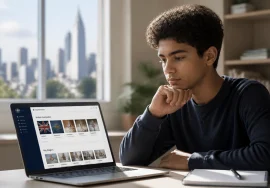
Before the first day, you’ll need to ensure the home environment is ready. This means a stable internet connection, a quiet workspace, and a reliable headset. Most online schools use a Learning Management System (LMS) where all lessons and assignments live. Taking a few days to navigate this platform with your child can significantly reduce first-day nerves.
Step 4: The Settling-In Period
The first two to four weeks are about adjustment. Your child is moving from a one-on-one or self-paced model to a live, timetabled environment. It’s normal for them to feel a little tired at first as they get used to the new pace. This is where our pastoral care team steps in to ensure every student feels supported.

Helping Your Child Adjust
The emotional shift can be just as significant as the academic one. For a child who has been homeschooled for years, being part of a "class" again is a big change.
Emotional and Social Aspects
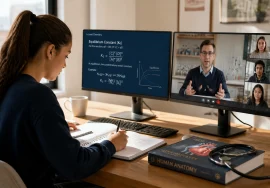
Some students might feel anxious about speaking up in a live lesson. We encourage a "camera-on" policy to help build that human connection, but we also allow students to use chat functions and interactive tools to participate at their own comfort level. Remind your child that everyone in that virtual room is there to learn, just like them.
New Routines and Expectations
Transitioning involves adopting a "school mindset" during certain hours of the day. This means being "present" for live lessons and meeting homework deadlines. It’s helpful to maintain a clear physical boundary, when they are at their desk, they are at school. When they step away, they are home.
Building Confidence in a Classroom Setting
Online schooling is a fantastic middle ground for building confidence. It’s less intimidating than a physical classroom of thirty people, yet it still requires students to articulate their thoughts and collaborate. Our teachers are experts at fostering an inclusive environment where every voice is heard, which is central to our student wellbeing philosophy.
Curriculum Alignment: Will Previous Learning Count?
One of the biggest concerns for homeschooling parents is whether their hard work will "count." The short answer is: absolutely.
The British National Curriculum is designed to be a progressive journey. If you have been following a standard UK-based homeschooling programme, the transition will be very smooth. However, even if you’ve been "unschooling" or following a more eclectic curriculum, our teachers are skilled at mapping that prior knowledge onto the formal framework.
Assessment of Prior Knowledge
During the onboarding process, we look at any work samples or previous assessments you might have. This helps us place your child in the correct year group, whether that’s Online Primary School or moving into GCSEs.
Catching Up vs Moving Ahead
Homeschooled students often have an "uneven" profile, they might be two years ahead in Reading but slightly behind in formal Science. Online schooling allows for a more nuanced approach. We can provide support in areas that were perhaps neglected while allowing your child to continue excelling in their strengths.
GCSE Preparation: Why Timing Matters
If you are considering a switch for a student in Year 9 or Year 10, timing is everything. The GCSE (and International GCSE) programme is typically a two-year commitment.
Avoiding Gaps Before Exam Years
Switching before the start of Year 10 is the gold standard. This ensures your child starts the syllabus at the same time as their peers and doesn't miss any foundation modules. If you are switching mid-way through Year 10 or 11, it is still possible, but it requires a more intensive "gap analysis" to ensure they are ready for the exams.
Structured Revision and Mock Exams
One of the hardest things to replicate at home is the "exam environment." Online schools provide formal mock exams, timed assessments, and specific revision sessions. This reduces the "shock" of the final exam day. According to the UK Department for Education, parents are responsible for ensuring their home-educated children receive an efficient full-time education; a structured online school makes meeting this legal requirement much simpler.
Exam Centre Support
iBOS is a registered Pearson Edexcel Examination Centre. This is a huge benefit for families transitioning from homeschooling, as we can provide guidance on where and how to sit exams, often removing the stress of searching for a private candidate centre on your own.

A Practical Parent Checklist
Ready to make the move? Here is a simple checklist to keep you on track:
- Audit your current curriculum: What have you covered in the last 12 months? Keep a folder of your child's best work.
- Identify the "Why": Is the move for academic reasons, social reasons, or parental burnout? Knowing this helps you choose the right school.
- Attend a Taster Lesson: If the school offers one, let your child experience the interface.
- Check Accreditation: Ensure the school is recognised by bodies like the Council of International Schools (CIS).
- Review the Timetable: Will the live lesson times work with your family life? Remember, iBOS operates on UK time (GMT/BST).
- Set up the Space: Buy a comfortable chair, a good headset, and ensure the workspace is free from distractions.
- Plan the Social Transition: Keep up your local home-ed meetups initially so your child feels they are "adding" a community, not losing one.
How iBOS Supports Homeschooling Families
At iBOS, we don't just see ourselves as a school; we see ourselves as a gateway to the future. We understand that many of our families come from a homeschooling background and value their independence.
Our model is unique because it is built on a London-based physical infrastructure. While your child is learning from home, our teachers are working from our campus in Clapham, London. This provides a level of professional oversight, safeguarding, and academic consistency that few online-only platforms can match.
Whether your child is starting their journey in Year 1 or looking for a Sixth Form that will lead them to a top global university, we provide the structure they need to thrive.
Conclusion
Switching from homeschooling to an online school is a significant milestone, but it doesn't have to be a stressful one. By choosing a partner that values academic excellence and student wellbeing, you are giving your child the tools they need to succeed in a modern, digital world.
If you're ready to discuss how we can support your child's transition, our team is here to help you every step of the way. The journey from the kitchen table to a global classroom starts with a single conversation.
Frequently Asked Questions
Is online school the same as homeschooling?
Technically, no. In the UK, if you use a full-time online school like iBOS, you are moving toward a more formal "schooling" model where the school takes responsibility for the curriculum and teaching. However, your child still learns from home, maintaining many of the benefits of home education.
Can my child join mid-term?
Yes, at iBOS we often accept students mid-term, provided we have space in the year group. We provide a comprehensive induction to help them catch up with their peers.
Do I still need to be the "teacher" as a parent?
No. Once you enrol in iBOS, our UK-qualified teachers take over the instruction, marking, and feedback. Your role shifts to being a "learning coach", providing a supportive environment and ensuring your child attends their live lessons.
Will my child get a certificate of education?
Yes, students at iBOS work towards International GCSEs and A Levels, which are globally recognised qualifications accepted by universities and employers worldwide.