Homeschooling vs Online School: Which Is Better for Your Child?
There has never been a better time to look beyond the four walls of a traditional classroom. Over the last few years, the landscape of education has shifted dramatically. What was once a niche choice for a small number of families has now become a mainstream movement.
Today, thousands of parents are stepping away from the "one-size-fits-all" approach of local schools in search of something that actually works for their child’s unique needs. Whether your child is a high-achiever who feels held back, a quiet soul who finds the playground overwhelming, or a young athlete who needs a schedule that moves with them, the alternatives are more accessible than ever.
However, once you decide to leave the traditional system, you face a new question: Homeschooling vs Online School?
While the terms are often used interchangeably, they represent two very different ways of learning. Choosing between them isn't just about picking a platform; it’s about deciding what your day-to-day life as a family will look like. In this guide, we’ll break down exactly what sets them apart, helping you decide which path will lead your child to success.
What Is Homeschooling?
Traditional homeschooling (often called "Elective Home Education" or EHE in the UK) is a model where the parent takes full responsibility for their child’s education. In this world, the home is the hub, and the parent is the principal, the teacher, and the careers advisor all rolled into one.
The Traditional Homeschooling Model
In a pure homeschooling setup, there is no "school" directing the day. You don’t have to follow the National Curriculum, you don't have to follow a timetable, and you don't have to start at 9:00 am. This freedom is the biggest draw for many families. It allows for "unschooling": where learning is led entirely by a child's interests: or "worldschooling," where travel and experience become the primary teachers.
Parent-Led, Flexible, but Demanding
While the flexibility is wonderful, the workload is significant. As a homeschooling parent, you are responsible for:
- Researching and buying curriculum materials.
- Teaching every subject (from phonics to physics).
- Marking work and tracking progress.
- Organising social opportunities and sports.
- Finding and paying for exam centres for GCSEs and A Levels.
It is a deeply rewarding path, but it is effectively a full-time job for the parent.
The Legal Position in the UK
In the UK, homeschooling is perfectly legal. According to the official government guidance on home education, parents have a duty to ensure their child receives an "efficient, full-time education suitable to their age, ability and aptitude."
You don't need to be a qualified teacher, and you don't need to follow a specific syllabus. However, if you withdraw your child from a local school, you must notify them in writing. Your Local Authority may then make informal enquiries to ensure the education you’re providing is suitable.
What Is an Online School?
An online school, like the International British Online School (iBOS), offers the best of both worlds: the comfort and safety of learning from home, but with the professional structure and academic rigour of a top-tier private school.
Full-Time Digital School with Live Lessons
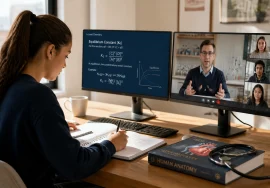
Unlike "self-paced" online courses where a child just watches recorded videos, a true British online school operates with a live, real-time timetable. Students log in at set times to attend interactive classes. They can see their teacher, chat with their classmates, and ask questions the moment they get stuck.
UK-Qualified Teachers
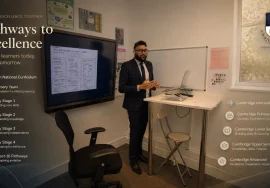
At iBOS, we believe that technology should enhance teaching, not replace it. Every lesson is delivered by UK-qualified teachers working from our physical campus in London. This means your child isn't just "learning from a computer": they are being mentored by experts who understand the nuances of the British Curriculum.
Structured Curriculum and Assessment
When you enrol in an online school, the heavy lifting is done for you. The school provides the curriculum, the timetable, the homework, and the regular progress reports. It replicates the discipline and standards of a physical school but removes the stress of the commute, the crowds, and the distractions of a traditional classroom.
Head-to-Head Comparison
To help you decide, let's look at how these two models compare across the most important areas of a child's development.
Curriculum and Academic Rigour
In Homeschooling, the curriculum is whatever you want it to be. This is great for creativity but can lead to "gaps" in knowledge if a parent isn't confident in certain subjects.
In Online School, the curriculum is set and accredited. For example, our Online Primary School and Online Secondary School follow the British National Curriculum. This ensures that if your child ever needs to move back to a physical school or apply to university, their learning is perfectly aligned with international standards.
Live Teaching and Teacher Support
This is perhaps the biggest differentiator. In homeschooling, the parent is the teacher. This is lovely for bonding, but many parents find that by the time their child reaches Year 9 or 10, subjects like Further Maths or Chemistry become very difficult to teach at home.
Online schools provide specialist subject teachers for every class. At iBOS, our teaching and support staff are specialists in their fields. They don't just "deliver content"; they provide immediate feedback, mark assignments, and offer one-to-one support when a student is struggling.

Socialisation and Community
A common myth is that "homeschooled" children are lonely. In reality, homeschoolers often have a vibrant community of local groups and meet-ups. However, it takes a lot of effort from the parent to coordinate these.
Online school provides a "ready-made" social circle. Students interact daily in live lessons, collaborate on group projects, and join extracurricular clubs. Because iBOS is a truly global school, your child will make friends with peers from London to Dubai, Cairo to Tokyo, broadening their horizons in a way a local school never could.
Parent Involvement
- Homeschooling: High. You are the teacher, the administrator, and the motivator.
- Online School: Moderate. You act as a "Learning Coach": supporting your child’s routine and checking their progress reports, but leaving the actual teaching to the professionals. This allows many parents to continue their own careers while their children learn safely at home.
Exam Preparation and Accreditation
Getting a child ready for exams is often where the homeschooling dream meets a bit of a hurdle.
- Homeschooling: You must find an exam centre that accepts "private candidates," register your child, and ensure you’ve covered the exact syllabus the exam board requires.
- Online School: We are a registered Pearson Edexcel Examination Centre. We guide students through their GCSEs and A Levels with precision. Because we are an accredited school, we can provide the predicted grades and academic references that universities require.
University Preparation
Applying to a top-tier university requires more than just good grades. It requires a portfolio, a personal statement, and often a reference from a school principal.
- Homeschoolers often have to work harder to "prove" their academic standing to admissions officers.
- Online school students benefit from structured university guidance. At iBOS, we provide expert UCAS support, helping students progress to Russell Group universities and leading international institutions.
Flexibility and Routine
Homeschooling offers Total Flexibility. If your child learns best at 7:00 pm, you can do that.
Online school offers Structured Flexibility. There is a set timetable for live lessons, which provides the routine and accountability that many children (especially those with ADHD or neurodiversity) need to stay focused. However, because the lessons are recorded, there is still a safety net if a student misses a class.
Comparison Summary Table
| Feature | Homeschooling (DIY) | Online School (iBOS) |
|---|---|---|
| Primary Teacher | Parent or Private Tutors | UK-Qualified Subject Specialists |
| Curriculum | Chosen by Parent | British National Curriculum |
| Daily Routine | Fully Flexible | Timetabled Live Lessons |
| Socialisation | Parent-Organised Groups | Daily Peer Interaction & Clubs |
| Reporting | Self-Tracked | Regular Formal Progress Reports |
| Exam Support | Parent Finds Exam Centre | Structured Exams at iBOS |
| University Path | Independent UCAS Application | Full UCAS & Career Guidance |
| Parent Workload | 20-40+ hours per week | 2-5 hours per week (Support) |
Who Thrives in Each Model?
The Homeschooling Child
Traditional homeschooling is often the best fit for:
- Extreme Explorers: Children whose interests are so specific they don't fit into any standard curriculum.
- Young Professionals: Children with intensive professional commitments (like elite athletes or actors) who literally cannot follow a set timetable.
- Families on the Move: Families who are "slow-travelling" and don't always have reliable internet or a stable time zone.
The Online School Student
Structured online learning is usually the better choice for:
- Academic High-Flyers: Students who want to ensure they get the top grades needed for Oxford, Cambridge, or the Ivy League.
- The Routine-Seekers: Children who feel anxious without a clear plan for the day. Having a teacher to "answer to" often provides the motivation that "learning with Mum or Dad" lacks.
- Neurodiverse Learners: Students who find the sensory input of a physical school too much, but still want the social connection of a classroom. Our focus on student wellbeing ensures every child feels seen and supported.

Can You Combine Both Approaches?
Many families find that a "Hybrid" approach works best. They might start with homeschooling during the Primary years to enjoy the freedom and play-based learning. Then, as the child approaches Secondary School, they transition to an online school to ensure they are properly prepared for their International GCSEs.
This allows the family to keep the lifestyle they love, but brings in the professional expertise needed for higher-level academic success.
How to Make the Right Choice for Your Family
If you’re sitting at your kitchen table trying to decide, ask yourself these three questions:
- How much time do I realistically have? If you are working or have multiple children, the "teacher" role of homeschooling can quickly lead to burnout. Online school gives you your time back.
- What is the end goal? If the goal is a smooth path to a top university, the accreditation and teacher-led rigour of an online school is much easier to navigate.
- Does my child need a push? Some children are self-starters. Most, however, work better when they have a professional teacher and a group of peers to inspire them.
Conclusion
Neither model is "better" in a vacuum: the best choice is the one that allows your child to flourish. Homeschooling offers unparalleled freedom, while online school offers the structure, community, and expert instruction of a world-class British education.
At iBOS, we are proud to support families who want the flexibility of home learning without sacrificing academic excellence. Our London-based teachers are ready to welcome your child into a classroom that is as rigorous as it is supportive.
Ready to see the difference for yourself? Book a discovery call with our admissions team today and discover how we can help your child reach their full potential from the comfort of home.
Frequently Asked Questions
Is an online school diploma as good as a traditional school diploma?
Yes. At iBOS, students sit the same International GCSE and A Level exams as students in physical private schools. These qualifications are the "Gold Standard" of British education and are recognised by every major university in the world.
Can my child switch from homeschooling to online school easily?
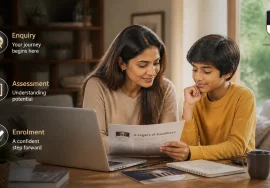
Absolutely. Because we follow the British National Curriculum, many homeschooled students find it easy to transition into our classes. We conduct assessments to ensure they are placed in the right year group to succeed.
How do online school fees compare to homeschooling?
Homeschooling costs can vary wildly: from the cost of a few library books to thousands of pounds for private tutors and exam fees. Online school fees are typically comparable to mid-range independent schools, but you save significantly on "hidden" costs like uniforms, transport, and school trips.
Does my child need special equipment?
All your child needs is a reliable internet connection, a laptop or PC, and a quiet place to learn. We handle the rest through our secure, high-tech learning platform.