
Plan the qualification and the examination route together.
Subject choice, specification, assessment, examination location and future recognition need one joined-up plan.
From International GCSE to International A Level.
iBOS is a JCQ-approved centre for Pearson Edexcel examinations. It accepts entries for enrolled pupils and for private candidates, and runs every sitting under the Joint Council for Qualifications regulations, so assessment is valid, reliable and fair, and results carry the same recognition as those from any other approved centre.
International GCSE
International GCSEs are normally studied across Years 10–11 and sat at the end of Year 11. They give pupils a broad, internationally recognised foundation for Sixth Form, further study or employment. iBOS publishes the specification codes for its examination routes, including English, mathematics, sciences, computing, humanities, languages and selected wider subjects.
International A Level
International A Levels are advanced qualifications for students aged 16–19 and sit at the same level as UK A Levels, giving a direct route to university. Each subject is modular, generally built from four to six units that are cashed in at the end of the course for an overall grade. Students normally study three or four subjects across Years 12–13.
Most units are sat towards the end of the course in Year 13
Where teachers judge a student ready, some units are entered in Year 12
Unit results combine into one International A Level grade per subject
How Papers Are Assessed
- Written examinations
- Oral examinations
- Practical assessment
Depending on the subject, International GCSE and International A Level assessment can include written examinations, oral examinations and practical assessment. The specification for each subject sets out exactly which components apply and how they are weighted.
The Specification Is the Source of Truth
Every subject page will link to the current Pearson specification and summarise content and assessment in parent-friendly language. The specification, not marketing copy, governs what is examined.
Sitting at iBOS or at a Host Centre
iBOS acts as the entry centre: it enters candidates through the Pearson Edexcel portal and handles results, certificates and post-results services. Candidates can sit their papers at the school in Clapham, London, or be entered by iBOS and hosted by another approved centre nearer home.
Sit at iBOS in London
The school invoices the entry, hosting, invigilation and certification charges together
Entered by iBOS, Hosted Near You
iBOS invoices the entry, administration and certification charges; the host centre invoices its hosting fee directly
Sit From Home
A live Pearson invigilator supervises by webcam, and iBOS still makes the entry. Available for many written papers.
How it works| Who handles… | Sitting at iBOS | Hosted elsewhere |
|---|---|---|
| Entry with Pearson | iBOS | iBOS |
| Exam room and invigilation | iBOS, in Clapham, London | The host centre |
| Entry, administration and certification invoice | iBOS | iBOS |
| Hosting fee | Included in the iBOS invoice | Invoiced by the host centre, paid to it directly |
| Results, certificates and post-results services | iBOS | iBOS |
Before You Book a Host Centre
The hosting fee pays the host centre for the room, invigilation and handling of papers, so families settle it with that centre on its own terms
iBOS recommends host centres it has worked with in the candidate’s country, so please speak to the Exams Officer before approaching a centre yourself
In some countries no centre accepts external candidates; iBOS may then ask families to help find a centre, or the candidate may need to travel to a neighbouring country to sit
Sitting from Home with Remote Invigilation
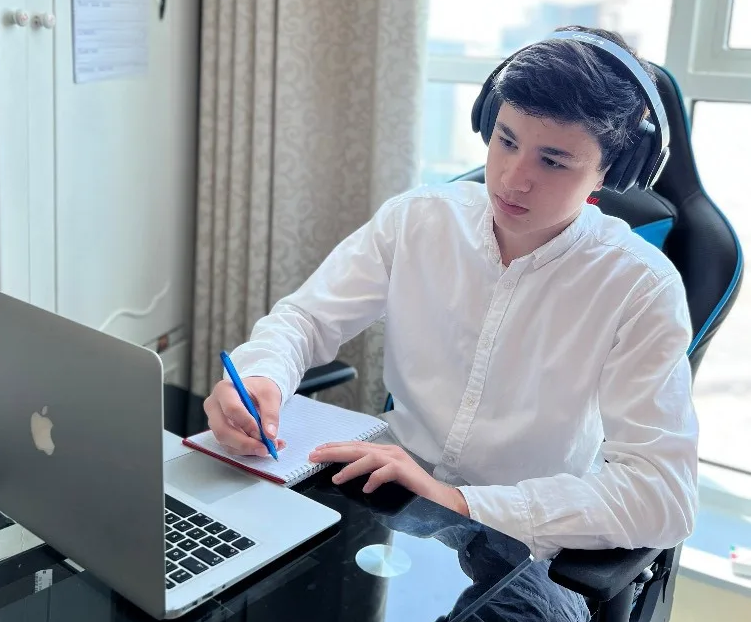
Where travelling to a centre is not possible, candidates can sit many International GCSE and International A Level written papers at home, or in another quiet, private room, through Pearson’s remote invigilation service. A live Pearson invigilator supervises through the webcam, and iBOS still makes the entry and handles results. The Exams Office confirms the subjects available, eligibility, charges and the entry deadline, which comes earlier than for papers sat in a centre.
- Equipment
A computer with a webcam and microphone, a phone or tablet with Pearson’s exam app, a backup device recording the room, and a printer and scanner
- Before the exam
A parent or guardian agrees to Pearson’s Terms of Use, and the candidate takes a mandatory practice session on the assessment player
- On the day
A parent or guardian is present at login and available during set-up and submission
Examination Charges
Charges are per examination paper, not per subject. For candidates sitting at iBOS they cover candidate entry, paper dispatch, invigilation and certification. The Exams Office confirms the charges for each series in writing before entries are made, and quotes separately for access arrangements such as extra time, a reader, a prompter or a reading pen.
- International GCSEExcluding French and Spanish
- iBOS pupilsSitting at iBOS
- £195per paper
- Private candidatesSitting at iBOS
- £220per paper
- Hosted elsewhereEntered by iBOS
- £85per paper
- International GCSE French and Spanish
- iBOS pupilsSitting at iBOS
- £225per paper
- Private candidatesSitting at iBOS
- Ask the Exams Office
- Hosted elsewhereEntered by iBOS
- £105per paper
- International AS and A LevelExcluding French, Spanish and Persian
- iBOS pupilsSitting at iBOS
- £185per paper
- Private candidatesSitting at iBOS
- £210per paper
- Hosted elsewhereEntered by iBOS
- £75per paper
- AS and A Level French, Spanish and Persian
- iBOS pupilsSitting at iBOS
- £225per paper
- Private candidatesSitting at iBOS
- Ask the Exams Office
- Hosted elsewhereEntered by iBOS
- £105per paper
- Extended Project QualificationEPQ · P301
- iBOS pupilsSitting at iBOS
- £85per paper
- Private candidatesSitting at iBOS
- Ask the Exams Office
- Hosted elsewhereEntered by iBOS
- £85per paper
- UK GCSEPrivate candidates only
- iBOS pupilsSitting at iBOS
- Not offered
- Private candidatesSitting at iBOS
- £170per paper
- Hosted elsewhereEntered by iBOS
- Not offered
- UK AS and A LevelPrivate candidates only
- iBOS pupilsSitting at iBOS
- Not offered
- Private candidatesSitting at iBOS
- £220per paper
- Hosted elsewhereEntered by iBOS
- Not offered
| Qualification | iBOS pupilsSitting at iBOS | Private candidatesSitting at iBOS | Hosted elsewhereEntered by iBOS |
|---|---|---|---|
| International GCSEExcluding French and Spanish | £195per paper | £220per paper | £85per paper |
| International GCSE French and Spanish | £225per paper | Ask the Exams Office | £105per paper |
| International AS and A LevelExcluding French, Spanish and Persian | £185per paper | £210per paper | £75per paper |
| AS and A Level French, Spanish and Persian | £225per paper | Ask the Exams Office | £105per paper |
| Extended Project QualificationEPQ · P301 | £85per paper | Ask the Exams Office | £85per paper |
| UK GCSEPrivate candidates only | Not offered | £170per paper | Not offered |
| UK AS and A LevelPrivate candidates only | Not offered | £220per paper | Not offered |
Hosted elsewhere: the iBOS charge covers the entry and certification; the host centre’s own hosting fee is extra and is paid to that centre.
Registering for Exams
Students enrolled at iBOS register online once a Pearson series opens: choose the session, the papers and where to sit, and the Exams Office checks the registration and sends an invoice. The entry is made once the invoice is paid, and no payment is taken on the form. Private candidates must not use the form; they email the Exams Office first to check availability.
iBOS students
Register online for the January or June series
Go to the registration formPrivate candidates
Email exams@ibos.education to check availability before anything is booked
Email the Exams OfficeSitting from home
Ask the Exams Office first, because remote entries close earlier
Read the remote invigilation guideFrom entry to certificate.
Entry deadlines precede each examination series and late entries attract additional charges. Access arrangements require evidence and approval, so families should raise requirements with the Exams Office well before registration.
Plan Subjects and Location
Agree the papers, the series and where the candidate will sit.
Enter Before the Deadline
iBOS makes the entry on the Pearson portal. Late entries cost more.
Pay the Invoice
Settle the iBOS invoice, and any host centre’s fee, by the due date.
Sit the Papers
At iBOS in London or at the agreed host centre, on Pearson’s timetable.
Results and Certificates
Results arrive through iBOS, followed by Pearson’s award certificates.
Post-Results Services
Request a script copy or a review of marking within Pearson’s deadlines.
Paper and Unit Codes
Use these Pearson Edexcel codes to check an entry or find a paper on the examination timetable.
- Sciences
- Mathematics
- English and languages
- Humanities and social sciences
- Computing
International A Level Unit Codes
| Subject | Units |
|---|---|
| Biology |
|
| Chemistry |
|
| Physics |
|
| Mathematics |
|
| Further Mathematics |
|
| Business |
|
| Economics |
|
| History |
|
| Psychology |
|
| English Language |
|
| French |
|
| Spanish |
|
| Persian (A Level) |
|
International GCSE Paper Codes
| Subject | Specification | Papers |
|---|---|---|
| Mathematics A | 4MA1 |
|
| English Language B | 4EB1 |
|
| English Literature | 4ET1 |
|
| French | 4FR1 |
|
| Spanish | 4SP1 |
|
| Persian (GCSE) | 1PN0 |
|
| Biology | 4BI1 |
|
| Chemistry | 4CH1 |
|
| Physics | 4PH1 |
|
| Science (Double Award) | 4SD0 |
|
| Science (Single Award) | 4SS0 |
|
| Computer Science | 4CP0 |
|
| Business | 4BS1 |
|
| Economics | 4EC1 |
|
| Geography | 4GE1 |
|
| History | 4HI1 |
|
| Religious Studies | 4RS1 |
|
| Global Citizenship | 4GL1 |
|
Examination Timetables
Pearson publishes provisional and final timetables for every International GCSE and International A Level series on its qualifications website. Use the paper codes on this page to find each paper. Timetables are set in UK time, so candidates sitting abroad should check the local start time with their host centre.
Examination Terms Explained
These terms appear in entry, invoicing and results correspondence.
- Entry centre
The centre that registers the candidate with Pearson, confirms they are studying with it and is responsible for certificates and post-results services
- Host centre
A centre that provides the room and invigilation for a candidate entered elsewhere; it does not make the entry
- Entry fee
The awarding body’s charge for each paper entered, invoiced by the entry centre with administration and certification costs
- Hosting fee
The host centre’s charge for running the sitting, invoiced by that centre
- Entry deadline
The date by which entries must reach Pearson; later entries attract late fees
- Cashing in
Combining International A Level units into an overall subject grade at the end of the course
- Award certificate
The awarding body’s record of the candidate’s name, qualifications and grades, used as evidence for university applications
- Post-results services
Reviews of marking and copies of scripts, requested through iBOS within Pearson’s deadlines and usually charged
Internal Assessment for iBOS Pupils
Public examinations sit alongside the school’s own assessment, which tracks progress long before any paper is sat.
CAT4
Taken when a pupil joins, to understand their abilities and set academic targets for their time at iBOS
Assessment Points
Chapter tests taken twice each term, six a year for pupils in Years 3–10
Termly reports
Assessment Point scores and progress against targets, shared with families each term
Weekly reports
The lessons covered, what went well (WWW) and what would be even better if (EBI), so parents see each week in class
Reports are published to the student and parent portals
Private Candidates
Candidates who are not enrolled at iBOS can be entered as private candidates, for International GCSEs and International A Levels and, when sitting at the school in London, for UK GCSEs and A Levels. Private candidates must not use the online registration form, which is for iBOS students: email exams@ibos.education first with the qualification, paper codes and series you need, and the Exams Officer will confirm availability before anything is booked.
Exam Questions
Which qualifications does iBOS offer?
Pearson Edexcel International GCSEs in Years 10–11 and Pearson Edexcel International A Levels in Years 12–13. Private candidates sitting in London can also be entered for UK GCSEs and A Levels.
How are International A Levels different from International GCSEs?
International GCSEs are the two-year qualifications most pupils complete at 16. International A Levels are advanced, modular qualifications taken at 16–19, at the same level as UK A Levels, and are the usual route to university.
Can my child sit exams if we do not live in London?
Yes. iBOS enters the candidate and recommends an approved host centre it has worked with in or near your country, or, for many written papers, the candidate can sit from home through Pearson’s remote invigilation service. Please talk to the Exams Officer before approaching a centre yourself.
Can a candidate sit exams from home?
Yes, for many written International GCSE and International A Level papers. A live Pearson invigilator supervises through the webcam, and the candidate needs a computer, a second device, a backup device and a printer and scanner. Remote entries close earlier, so contact the Exams Office well before the series.
How do private candidates register?
By email, not through the online form, which is for iBOS students only. Write to exams@ibos.education with the qualification, papers and series; the Exams Officer confirms availability, makes the entry and sends an invoice, and the entry is made once it is paid.
Why is the hosting fee paid to another centre?
The host centre provides the room, the invigilators and the secure handling of papers on the day, so it invoices that service itself. The iBOS invoice covers the entry, administration and certification.
How do I pay for exam entries?
iBOS issues an invoice for the entry, administration and certification charges, which is paid to the school by its due date. Any hosting fee is paid to the host centre on its invoice.
What happens if we miss the entry deadline?
Pearson charges late entry fees after the deadline, and after the final cut-off a candidate may have to wait for the next examination series. Contact the Exams Office as early as possible.
Can a candidate have extra time or other access arrangements?
Yes, where there is evidence of need and the arrangement is approved under JCQ rules. Raise it with the Exams Office well before entries close, and ask for a quote for any extra cost.
Who issues the certificates?
Pearson issues award certificates to the entry centre, and iBOS passes them to candidates. Keep them safe: universities and employers ask for them as evidence of results.
How can a result be challenged?
Through Pearson’s post-results services. iBOS can request a copy of the script and a review of marking on the candidate’s behalf, within Pearson’s deadlines; these services are usually charged.
Do host centres have to meet any requirements?
Yes. A host centre needs Pearson approval to run Pearson Edexcel examinations and meet Pearson’s requirements for secure storage, invigilation and conduct. That is why iBOS recommends centres it already works with.
Teaching online. Public examinations with formal controls.
iBOS is a JCQ-approved centre offering Pearson Edexcel International GCSE and International A Level entries for pupils and private candidates.
- 01
Choose the pathway
Match subjects to prior attainment, assessment style and later study.
- 02
Confirm the specification
Record the current Pearson title, code, units and assessment route.
- 03
Plan the examination series
Agree readiness, deadlines, access arrangements and the place of examination.
- 04
Enter the correct papers
International A Level entries are made unit by unit; iGCSE entries follow the published specification.
- 05
Results and progression
Connect results, certification, resits where appropriate and the pupil’s next stage.
Do not take one page, or one claim, on trust.
Follow the questions that matter, compare the evidence and decide whether the complete school model fits your child.
Place This Within Years 1–13
Understand what comes before, what follows and where qualifications begin.
02 · ExperienceSee How Live Teaching Works
Look beyond a subject list to questioning, feedback and participation.
03 · OutcomePlan Assessment and Examinations
Connect subject choices to specifications, exam entry and later destinations.
The next useful page depends on your question.
Register for Exams
Register an iBOS student for the January or June series.
Remote Invigilation
Sit written papers from home with a live Pearson invigilator.
Pearson Exam Timetables
Find the dates of each paper in the current series.
Exam Results
See iGCSE and A Level outcomes year by year.
Secondary
See the iGCSE stage.
Sixth Form
See the IAL stage.